
What Is a Futsal Game: An Introduction
When you hear “futsal gamersion of e”, think of a fast-paced, skill-filled, indoor version of football — a smaller, more concentrated vsoccer where technique, quick thinking, and teamwork shine. Futsal is not just a casual pastime; it’s a structured, official sport recognized around the world. The appeal of a futsal game lies in its simplicity, intensity and ability to sharpen a player’s abilities in ways that regular soccer sometimes cannot.
A futsal game brings together five players per side — one goalkeeper and four outfield players — on a small, indoor court with a special ball and unique rules that emphasize control, agility, and creativity. Whether you are a beginner or already love soccer, futsal offers a fresh and exciting way to play.
Origins and History of Futsal Game

The story of the futsal game begins in the 1930s in Montevideo, Uruguay, where a physical-education teacher named Juan Carlos Ceriani designed a version of soccer that could be played indoors — often in basketball courts.
Ceriani took elements from several sports to build futsal: the five-a-side team and game duration idea from basketball, goal and court sizes from handball, goalkeeper rules inspired by water polo, and substitution rules similar to hockey.
What started modestly in Uruguay soon spread across South America and beyond. Over the decades, futsal evolved from informal indoor games to a structured sport. In 1989, FIFA officially recognized futsal, and since then the futsal game has grown globally, with international tournaments, local leagues, and countless players enjoying it in gyms, halls, and small courts.
Why Futsal Game Is Different: Key Features
Court and Environment
Unlike traditional football played on large grassy fields, a futsal game usually happens indoors on a hard surface. The court is smaller — roughly 40 m by 20 m — making plays tighter and faster.
Because it’s on a hard, flat surface and uses a smaller, heavier ball (size 4, low-bounce), the futsal game demands more precise ball control. The low bounce ensures the ball stays close to the ground, encouraging short passes, quick footwork, and sharp reflexes.
Teams and Match Duration
Each team in a futsal game has five players on the court — four outfield players plus a goalkeeper. There are rolling (unlimited) substitutions, which keeps players fresh and maintains the pace throughout.
A standard futsal game consists of two 20-minute halves. The clock can stop when play is interrupted, much like in basketball or handball, which keeps the game flowing and ensures that time lost due to stoppages does not unfairly shorten playing time.
Rules That Shape the Play
Futsal has a few rules that differ from outdoor soccer and shape its unique style: there is no offside rule, play restarts with kick-ins instead of throw-ins, and goalkeepers have restrictions (for example, they cannot hold the ball too long and are often more involved in outfield play).
The combination of smaller pitch, heavier ball, fewer players, and special rules encourages fast passing, tight control, quick decisions, creativity, and constant movement — making the futsal game intense, engaging, and very skill-oriented.
Physical, Technical and Mental Benefits of Playing Futsal Game
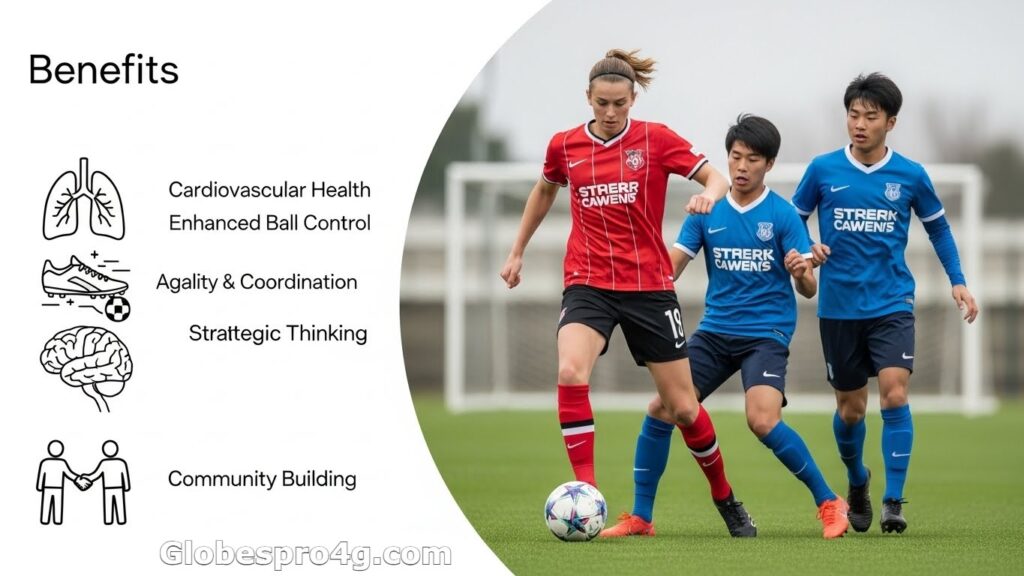
Enhanced Ball Control and Technical Skills
Because the ball used in a futsal game is smaller, heavier, and less bouncy, players quickly learn to keep it close, control it under pressure, and use quick, precise touches. These skills — dribbling in tight spaces, close control, accurate passing — become second nature.
The limited space and fewer players mean each participant gets more touches on the ball than in traditional soccer. Some studies suggest that in futsal players receive significantly more ball contacts — leading to much faster development of technical abilities.
Better Decision-Making and Game Intelligence
A futsal game moves rapidly. Players must think, react and decide very quickly — when to pass, dribble, shoot or reposition. This constant mental engagement improves decision-making, spatial awareness, anticipation, and tactical thinking.
Because the game is tight and dynamic, futsal fosters creativity. Players often invent quick combinations, find clever passes, or create space out of seemingly no room. This freedom to express creativity makes futsal not just technical training, but also a breeding ground for flair, improvisation, and confidence.
Fitness, Agility, and Physical Conditioning
A futsal game is intense — with frequent sprints, changes in direction, and bursts of action. Studies show that futsal involves high-intensity intermittent activity requiring substantial physical effort.
This kind of play improves cardiovascular endurance, agility, balance, coordination, and overall fitness. Especially for those who spend a lot of time outdoors or are used to traditional soccer, futsal can offer a different kind of training that builds quickness and responsiveness.
Inclusivity and Accessibility
Because a futsal court is small and the team size is just five per side, it requires fewer players and less space than a full soccer field. This makes it easier to organize games — even informally among friends — and accessible to people of different ages, skill levels, or physical condition.
Also, as an indoor game played on hard surfaces, futsal is not heavily affected by weather — meaning you can play regardless of rain, heat, or cold. For many people living in urban areas with limited open space, futsal is a practical and fun way to play “football.”
Futsal Game vs. Traditional Soccer: What’s the Difference?
| Feature | Futsal game | Traditional Soccer |
| Team size | 5 per side (incl. keeper) UEFA.com+1 | 11 per side |
| Play area | Small indoor hard court (approx. 40 × 20 m) PMC+1 | Large outdoor field (grass or turf) |
| Ball | Smaller, heavier, low-bounce ball The Soccer Handbook+1 | Larger, bouncier ball (standard) |
| Game duration | 2 halves × 20 minutes, clock stops for stoppages PMC+1 | 2 halves × 45 minutes (running clock plus stoppage time) |
| Substitutions | Rolling/unlimited UEFA.com+1 | Limited substitutions |
| Offside rule | No offside rule The Soccer | Offside rule applies |
| Style | Quick, tight, technical, creative, high touches per player | Wider, more physical, ballistic, strategic over space |
Because of these differences, a futsal game emphasizes skill, agility, control, creativity, quick thinking, while traditional soccer emphasizes endurance, long passes, speed over space, physicality, and team tactics over a larger field.
For players and coaches, futsal is often seen — not as a replacement — but as a powerful complement to traditional soccer training.
Why Futsal Game Is Great for Beginners and Youth Players
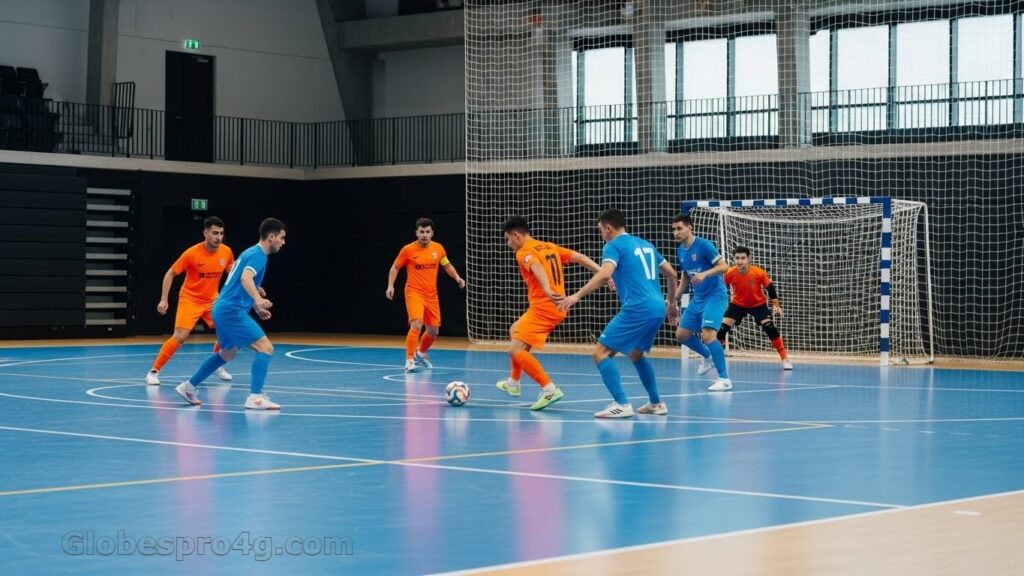
If you are new to football or young and just learning, the futsal game offers many advantages:
- More touches, more learning: In a small futsal court, every player is involved constantly. You get more opportunities to control the ball, practice dribbling, passing, shooting — building fundamentals fast.
- Faster learning of technique: Because the ball bounces less and stays close to the ground, beginners learn proper foot-control, ball handling, quick passes and sharp reflexes.
- Encourages creativity and confidence: Tight spaces mean you must think fast, react, improvise — helping you develop creativity, quick thinking, and confidence with the ball.
- Less space needed, easier to organize: You don’t need a big grassy field; a small indoor hall or basic court will do. This makes futsal accessible, even for urban players, community clubs, or school teams.
- Safe, controlled conditions: Indoors, on hard floor, with fewer players and limited physical contact compared to full football — making it relatively safer and more manageable for younger players.
Because of all these benefits, many clubs, coaches, and football academies around the world use futsal as a foundational tool for youth development.
Futsal Game and Player Development — Skills That Transfer to Soccer
Many top-level soccer players credit their early days in futsal for the technical skills, flair, speed, and creativity they developed. A futsal game instills habits that translate well to outdoor soccer.
— Technical Mastery: Ball Control, Dribbling, Passing
Since futsal demands precise touches and control in tight spaces, players develop finesse, control, and comfort with the ball at their feet. These skills are vital in soccer, especially in tight spots near the goal or when under pressure.
— Quick Decision-Making and Game Vision
In futsal, everything moves fast — you must decide in a split second whether to pass, dribble, shoot or reposition. This reflexive decision-making carries over to soccer, where quick thinking can change the game’s outcome.
— Better Spatial Awareness and Movement
Because the court is small and space is limited, futsal trains players to read movement, anticipate opponent and teammate actions, use space efficiently — qualities that are invaluable in full-field soccer.
— Versatility and Footwork
Futsal encourages players to use both feet, to make quick turns, to be agile — giving players versatility and footwork that make them unpredictable and effective on a larger soccer field.
In essence, a futsal game builds a strong technical foundation, sharpens mental and tactical skills, and improves physical agility — making it a powerful stepping stone for any aspiring soccer player.
Futsal Game Popularity: How It Spread Worldwide
What began in Uruguay in the 1930s soon spread throughout South America, where futsal resonated especially in urban areas with limited play space. Over time, as more people experienced futsal’s appeal — its speed, excitement, accessibility — it reached other continents.
Growth accelerated when global organizations, clubs, and federations recognized futsal’s value. Today, futsal is played in clubs, community centers, schools — both at amateur and professional levels around the world.
International competitions, organized leagues, and youth academies further fuelled interest. The fact that futsal needs fewer players and less infrastructure makes it especially popular in crowded cities or regions where large grassy fields are rare.
The Rules of a Futsal Game: What Makes It Unique

Understanding a futsal game means knowing some of its core rules that shape how it is played:
- Team size: Five players per side, including one goalkeeper.
- Ball: Smaller, heavier, low-bounce — encouraging ground passes and tight control.
- No offside: Unlike outdoor soccer, there is no offside rule in futsal, which changes attacking and defensive dynamics.
- Kick-ins instead of throw-ins: When the ball goes out of play on the sides, play restarts with a kick-in rather than a throw-in.
- Match duration: Two halves of 20 minutes each. The clock may stop during interruptions — leading to “real time” playing.
- Unlimited substitutions: Allows fresh players and keeps tempo high.
- Goalkeeper involvement: Because of small space, goalkeepers often engage more actively, and the game encourages skillful play rather than rough physical play.
These rules — combined with the small court and special ball — make a futsal game distinct, dynamic, and very skill-oriented.
Why Futsal Game Helps Even Outdoor Soccer Players
If you already play outdoor soccer (11-a-side), adding futsal to your training can sharpen your skills and make you a better overall player.
- Better ball mastery: Futsal refines close control, quick touches, tight-space dribbling — useful for midfield and attack in outdoor soccer.
- Faster thinking and reaction: The fast tempo forces quicker decisions — this helps in outdoor matches where speed of thought matters.
- Improved agility and fitness: Quick changes of direction, short sprints, bursts of energy — futsal improves fitness in a way that complements soccer stamina and strength.
- Stronger teamwork and communication: With fewer players and constant involvement, you learn to read teammates, communicate better, adapt quickly — all beneficial in larger team environments.
Because of this, many coaches and youth programs include futsal training as part of their regimen for soccer aspirants.
Common Misconceptions About Futsal Game
“Futsal is just small soccer” — Wrong!
No — futsal is not just “small soccer.” Though it shares roots with football, its smaller space, heavier ball, special rules and emphasis on close control make it a distinct game with its own tactics, skills, and rhythm.
“It’s only for beginners or kids” — Not true
Futsal is enjoyed by players of all ages and skill levels — from casual players to professional athletes. Many top-level football stars developed their skills through futsal first.
“It’s easy because the field is small” — Actually, it’s tougher
The reduced space makes mistakes costlier; there’s less room for error, and the pace is faster. Futsal demands precise control, quick thinking, fast reflexes — often harder than playing on a big field.
Who Should Play a Futsal Game: All Ages and Skill Levels
One of the best things about futsal is how inclusive it is. Because of small teams, limited space requirements, and simpler setup, futsal suits a wide variety of players:
- Beginners and youth looking to learn ball control, passing, and basic skills.
- Outdoor soccer players trying to sharpen technical skills, agility, and quick reaction.
- Casual players and friends wanting a fun, accessible, and social way to play football — without needing a big team or field.
- Urban residents with limited access to large pitches — futsal courts or indoor halls work great.
- Anyone wanting fitness, mental agility, and teamwork — futsal offers cardio, reflex training, coordination, and collaboration.
Because of its flexibility and appeal, a futsal game can be enjoyed by almost anyone — regardless of age or skill level.
How to Start Playing Futsal Game — Tips for Beginners
If you want to get into futsal, here are some simple steps:
- Find a court or indoor hall — Many community centers, gyms, or school halls can serve as places to play. Futsal does not need large fields.
- Use the right ball and shoes — A futsal ball (size 4 or smaller, low-bounce) and flat-soled shoes (or indoor soccer shoes) help you play properly.
- Start small: gather 4 friends, one goalkeeper, and you have a team. This low number makes organizing easy.
- Focus on control and passing: practice dribbling in tight spaces, quick passes, ball control, first touch. These are key skills in futsal.
- Embrace quick play and decision-making: learn to think fast, move the ball quickly, pass, dribble, shoot — the pace and tempo of futsal demand sharp minds.
- Use substitutions wisely: with rolling subs, keep players fresh, rotate often, and maintain high energy.
- Have fun and experiment: use the small space to try tricks, learn maneuvers, be creative — futsal rewards flair and improvisation.
Futsal Game as a Path to Professional Football — Why Coaches Love It
For coaches, academies, and youth programs, futsal game is more than fun — it’s a tool. Because it develops core technical skills, agility, creativity, and quick thinking, it acts as a foundational training method.
Players who grow up with futsal often display better ball control, superior dribbling, faster decision-making and sharper spatial awareness compared to those who only play traditional soccer. This can translate into better performance on full-size fields later.
Futsal encourages versatility — players often learn to play multiple roles (defender, winger, pivot, goalkeeper) on the same court because the space is tight and play is fluid. Such versatility is valuable in modern soccer, where adaptability matters.
Global Reach: Futsal Game Around the World
Over the decades, futsal has expanded massively from its South American origins to become a global sport. Urban centers, schools, clubs in Europe, Asia, Africa, and beyond have adopted futsal — drawn by its low infrastructure needs, fast gameplay, and widespread appeal.
Because futsal requires fewer players and smaller space, it has often thrived in densely populated or resource-limited areas — making football more accessible. This democratization is one reason for its global popularity.
Many professional football academies also integrate futsal training into their programs — recognizing its benefits in producing technically gifted, creative, and mentally sharp players.
The Joy, Culture and Social Side of Playing Futsal Game
Beyond skill or fitness, a futsal game brings people together. It’s often social, spontaneous and inclusive. Whether you are playing with friends after school, joining a community team, or participating in a local futsal tournament — the game fosters teamwork, communication, friendship, and collective fun.
Its small-team format and indoor setting make it easier to organize casual games — you don’t need a full eleven players or perfect weather. For many, futsal becomes a way to stay active, socialize, relieve stress, and enjoy football in a more relaxed yet energetic environment.
Futsal’s pace, creativity, and possibility for flair also make it fun to watch — whether you play or just love football.
Challenges and Things to Keep in Mind When Playing Futsal
While futsal game offers many benefits, there are a few things to consider:
- The smaller space and fast pace might be tiring especially for beginners — stamina and agility are tested more continuously.
- The heavy, low-bounce ball and hard floor might feel different if you are used to grass and regular football — requires adjustment in technique, control, and movement.
- Indoor courts or halls may not always be available depending on location — in some regions finding a proper futsal court may be a challenge.
- Because the game is tight and intense, good teamwork, communication, and quick decision-making are essential — solo play is much harder.
Despite these challenges, with practice and adaptation, players can enjoy great benefits from playing a futsal game.
Conclusion
The futsal game is a beautiful blend of speed, skill, creativity, fitness, and fun. It’s not simply a smaller version of football — it’s a unique sport that challenges players to think, act, react, and collaborate rapidly, all while honing their technical skills and ball control.
Whether you’re a beginner wanting to learn, a young player building fundamentals, a recreational player looking for fun, or a serious athlete wanting to improve — futsal offers something valuable. Its accessibility, global popularity, and benefits make it a powerful tool for growth both on and off the pitch.
If you’ve never tried a futsal game, maybe now is the time — gather a few friends, find a small court, get a futsal-style ball, and discover a game that might just transform how you think about football.