

Introduction
The phrase “united airlines charleston mechanical issue” brings to mind more than just a typical flight delay. It captures moments of panic, uncertainty, and sometimes relief when passengers realize their safety might have been at risk. In 2025, such an incident involving United Airlines at Charleston International Airport made headlines — a mechanical problem forced an emergency landing and evacuation, reminding everyone that air travel, though often routine, can still be unpredictable.
This article explores what happened, why such mechanical issues matter, how airlines respond, and what passengers can learn — all written in clear, human language.
What Happened at Charleston: The 2025 Incident
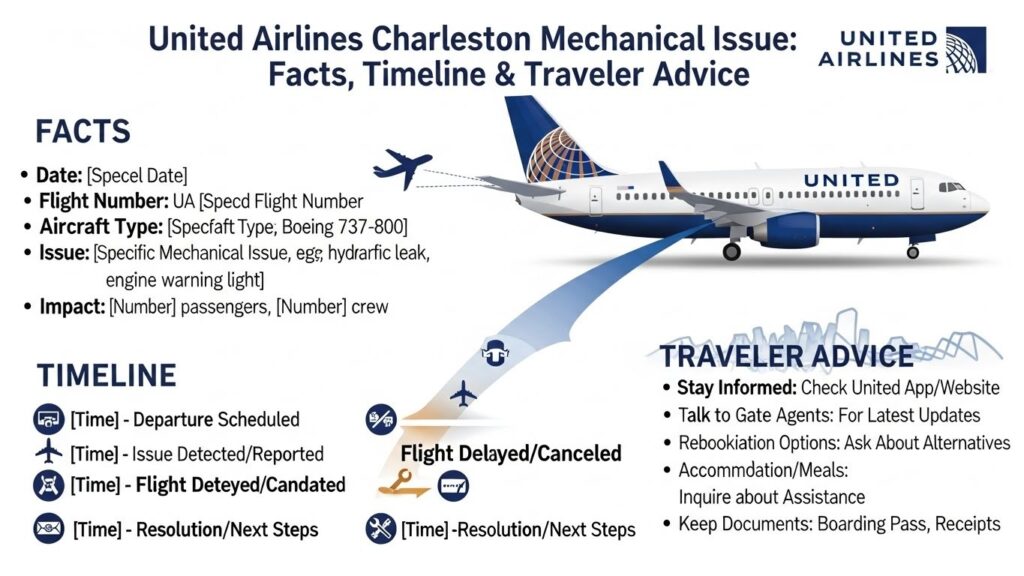
The Flight and Its Route
The flight in question had taken off from a major U.S. hub and was bound for Charleston International Airport. Late at night, during final approach or landing, the aircraft — under United’s operation — suffered a mechanical problem.
The Mechanical Problem and Emergency Landing
While the precise technical malfunction was not disclosed publicly, the situation was serious enough that the plane had to perform what officials called an emergency landing. On ground arrival, the crew ordered an evacuation. Inflatable slides were deployed. Passengers had to quickly leave the plane.
The Evacuation on the Tarmac
Passengers were escorted off the aircraft onto the tarmac under what must have been frightening circumstances. Multiple fire trucks arrived at the scene, just in case. Airport staff then moved everyone from the plane to the terminal for safety. Fortunately, there were no major injuries, but the emotional shock was very real.
What We Know — What We Don’t
Officials did not immediately specify the nature of the mechanical failure. Media reports noted only that a “mechanical issue” prompted the deplaning. The details — whether engine trouble, hydraulic failure, or something else — remained unconfirmed.
Why “Charleston Mechanical Issue” Matters — For Travelers and Aviation
Air Travel Isn’t Risk-Free
Many people think of commercial flights as routine and safe. Yet every once in a while, mechanical issues surface. Incidents like the Charleston case remind us: even with modern standards and layered safety measures, unexpected problems can happen.
Safety First: Why Evacuation Was the Right Call
Though an evacuation can be daunting — slides, tarmac, waiting — it’s often the safest option when there’s uncertainty about an aircraft’s integrity. In this incident, quick action prevented potential escalation.
The Ripple Effect on Airline Reputation
For an airline, mechanical issues that force emergency landings or evacuations are costly — not just financially, but reputationally. Passengers may lose confidence, hesitant to book future flights with the same carrier if they perceive safety concerns.
A Broader Look: Mechanical Issues Are Not Unique to Charleston
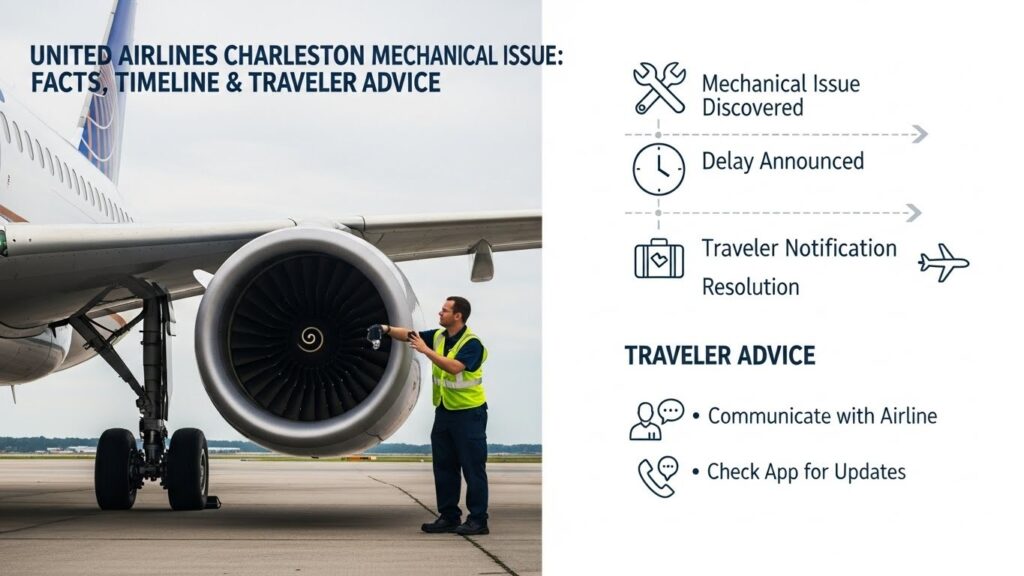
Past Incidents Involving United
This Charleston case is not the only time mechanical trouble forced an emergency diversion or landing for United. For example, a past flight departing Charleston once had to make an unscheduled landing at a different airport due to mechanical problems.
Recent System-wide Issues — Not Just Aircraft
In August 2025, United grounded hundreds of flights across the United States due to a “technology issue” — a system malfunction involving the airline’s internal flight-planning software. While not a mechanical failure of an aircraft, this incident demonstrates how even non-engine-related failures can disrupt operations massively.
Wider Aviation Reality
Airlines, even the largest ones, occasionally face mechanical or technical difficulties. It’s a fact of aviation life. What matters most is how they respond — safety protocols, emergency procedures, and transparency.
What Passengers Should Know: Their Rights and Expectations
Expect Transparency — But Might Not Get Full Details
Often, airlines and airports will say “mechanical issue” or “technical problem,” but may not disclose exact details. This is partly due to security concerns, partly due to ongoing investigations. So as a passenger, you may never know exactly what went wrong — but you can expect safe handling and honest updates.
Be Prepared for Delays, Evacuations, and Rebooking
If a flight draws a technical alert — at takeoff, mid-flight, or landing — be ready for possible deplaning, delays, or being rebooked. Especially if you’re traveling late at night, as with the Charleston case.
Know That Safety Comes First — Even If It Means Panic and Discomfort
No one enjoys sudden evacuations or emergency landings. But airlines follow protocol for a reason: to protect lives. If you hear crew instructions to move quickly, follow them. The discomfort is temporary; safety is paramount.
Check for Compensation or Rebooking Options
In many cases, airlines may offer rebooking, refunds, or assistance (meals, hotel stay, alternate flights) when the disruption is due to an airline-controlled mechanical problem. It doesn’t always guarantee full compensation — but you have a right to options.
Behind the Scenes: Why Mechanical Failures Happen
Aging Aircraft & Wear-and-Tear

Planes operate thousands of flights over years. Even with maintenance, parts age. Components like engines, hydraulics, control systems can gradually wear — increasing risk of malfunction. Overuse and long hours in the air contribute heavily.
Complexity of Aircraft Systems
Modern jets are marvels of engineering: engines, electronics, hydraulics, flight-control systems, landing gear — all deeply interconnected. A single faulty sensor or worn component can cause ripple effects, sometimes forcing emergency landings even if the “core” (like the hull) remains intact.
Maintenance, Repair, and Inspection Limitations
Airlines must maintain rigorous maintenance schedules. However, between inspections, parts can degrade or fail unexpectedly. Sometimes, issues emerge only under specific conditions — such as heavy load, difficult weather, or late-night flights — exactly the kind of environment that might surprise a technician.
Human and Operational Factors
Maintenance crews work under pressure and tight schedules. Logistics, spare-part availability, and human fatigue can influence repair quality. While safety standards are high, human error or oversight can never be fully eliminated.
What Airlines (and United) Should Do to Rebuild Trust
Be Transparent With Passengers
After an incident, airlines should promptly communicate what happened — even if only general statements (“mechanical issue,” “emergency landing,” “safe evacuation”). Honesty builds credibility.
Provide Post-Incident Support (Compensation, Rebooking, Care)
Passengers affected by mechanical disruptions deserve fair treatment — rebooking, hotel stays, meals, information. Proactive customer service can help calm anxieties and show that safety plus care is priority.
Review Aircraft Fleet and Maintenance Process
Airlines must continually audit fleet health. If certain aircraft or parts show recurring problems, maybe it’s time to retire or overhaul them. Regular, rigorous maintenance must remain non-negotiable.
Improve Communication Channels and Crisis Management
In emergencies — evacuations, landings, diversions — smooth, calm communication from crew can reduce panic. Airlines should train staff to handle both the mechanical and human side of incidents.
What Passengers Can Do to Stay Safe and Prepared
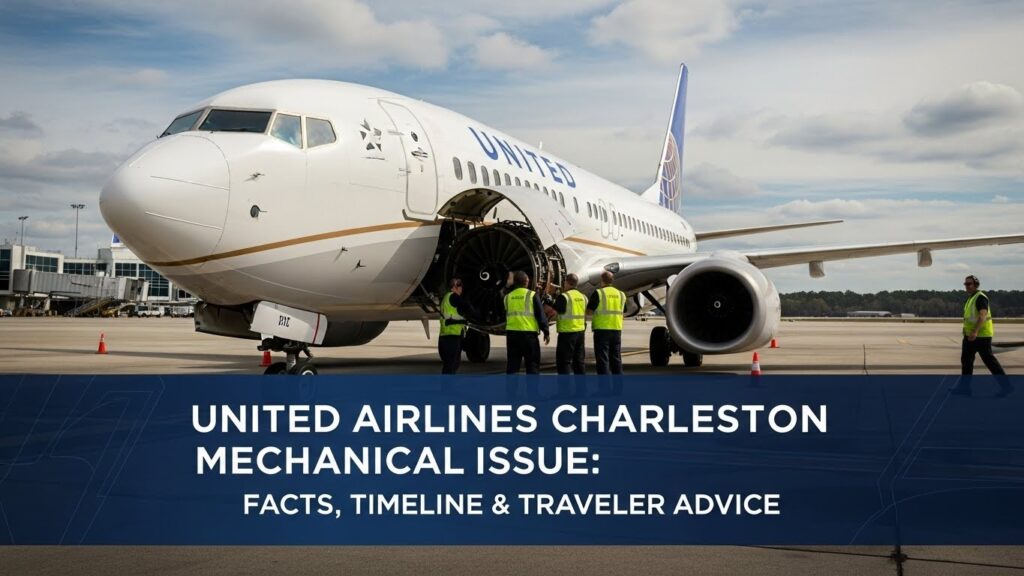
Stay Alert and Follow Crew Instructions
If something goes wrong — alarms, weird sounds, emergency announcements — stay calm, listen closely, and follow instructions. Crew training assumes passengers will cooperate.
Travel with Essentials in Carry-on
In unexpected evacuations or delays, checked luggage may be inaccessible. Keep essentials — medications, phone charger, a small bag with basic items — with you in the cabin.
Know Your Rights and Airline Policies
Before flying, check your airline’s policy on delays, evacuations, rebooking, compensation. Being informed helps in stressful situations.
Consider Travel Insurance for Added Peace
If you travel often — especially long routes or at odd hours — travel insurance can help cushion against disruptions. Mechanical issues, though rare, are part of travel risk.
Why Headlines Matter: The Impact of Terms like “United Airlines Charleston Mechanical Issue”
SEO and Public Awareness
When media reports such incidents — using terms like “United Airlines Charleston mechanical issue,” “emergency landing,” “evacuation” — they attract attention. People search these phrases online to find out what happened, how safe flying is, and whether they should fly soon.
For Prospective Flyers: Risk Perception Versus Reality
Such headlines may alarm people. But it’s important to remember: aviation standards remain high. Incidents are extremely rare compared to the number of flights daily. Still, transparent reporting allows travelers to make informed choices.
For Airlines: Reputation and Safety Record
Every publicized mechanical issue can dent trust. That’s why airlines must act fast — investigate, rectify, communicate — to maintain a strong safety reputation.
The 2025 Context: Is Aviation Facing More Mechanical/Technical Issues?
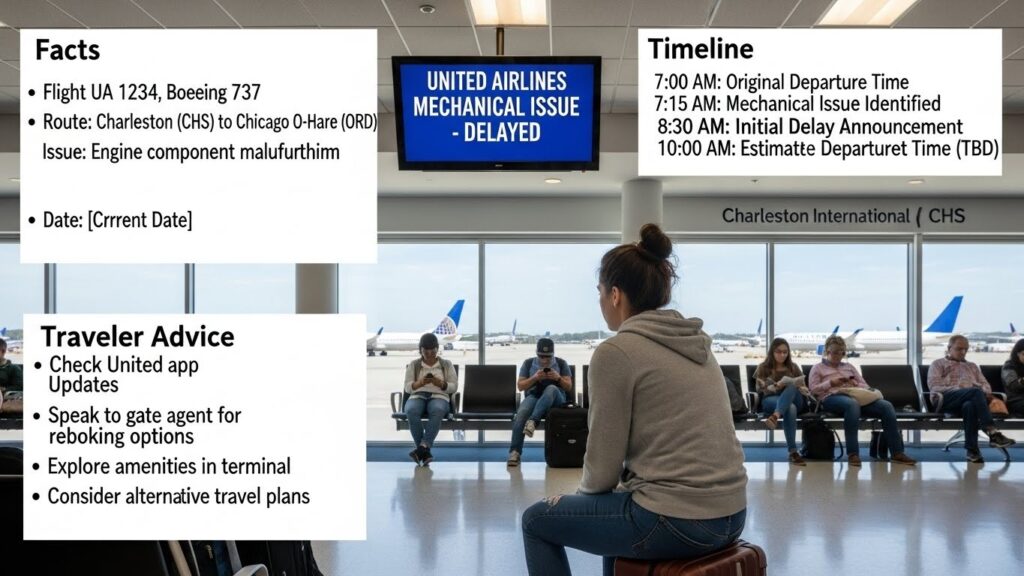
Yes — and not just at United. In 2025, global aviation will see a rise in both mechanical and technical (software/system) disruptions. For example, some airlines were forced to ground flights due to software glitches that affected flight-control systems.
Such incidents reveal that risk is not limited to old aircraft — even newer jets and complex networks depend on software, hardware, and human oversight.
What the Charleston Incident Teaches Us
- Even well-established airlines can face sudden mechanical problems, so absolute certainty in air travel is a myth.
- Airline and airport staff — from pilots to ground crews — play a central role in ensuring safety. Their quick action in Charleston likely prevented escalation.
- Passengers should travel with awareness and readiness: follow instructions, keep essential items in carry-on, and expect possible delays or diversions.
- Transparency and prompt communication are crucial for building trust after such incidents.
Why You Should Care: It’s About Safety, Trust, and Awareness
Maybe you don’t fly often. Maybe you never will. But transportation systems affect us all — for travel, business, tourism, and global connectivity. When incidents like “United Airlines Charleston mechanical issue” happen, they become part of a larger conversation about aviation safety, airline accountability, and traveler awareness.
If you plan to fly soon — especially long international flights or flights late at night — knowing that such stories exist can help you adopt a mindset of preparedness rather than panic.
What Happens Next: Investigation, Maintenance, and Avoiding Future Issues
After any mechanical failure or emergency landing, the airline and aviation authorities typically investigate:
- Inspect the aircraft — engines, hydraulics, flight-control surfaces, landing gear.
- Review maintenance logs and recent repairs.
- Decide if aircraft need temporary grounding for deeper checks or if certain components must be replaced.
- Update procedures or maintenance schedules if needed.
For passengers, this means the airline is actively working to prevent recurrence. For future flyers, it’s a reassurance: safety is not just a slogan — it’s an ongoing process.
Final Thoughts
The story behind “united airlines charleston mechanical issue” is not just a headline — it’s a reminder. It reminds us that air travel, despite its sophistication, relies on complex machines subject to wear, stress, and sometimes failure. It reminds airlines that safety and transparency matter. And it reminds travelers that being alert, prepared, and aware is part of ensuring a safe journey.
Flying will always carry some risk — but with high safety standards, professional crews, and responsible passengers, those risks remain very low. So when you next book a flight, you can fly not with fear — but with informed confidence.
 Finixio Digital
  Wild Rise